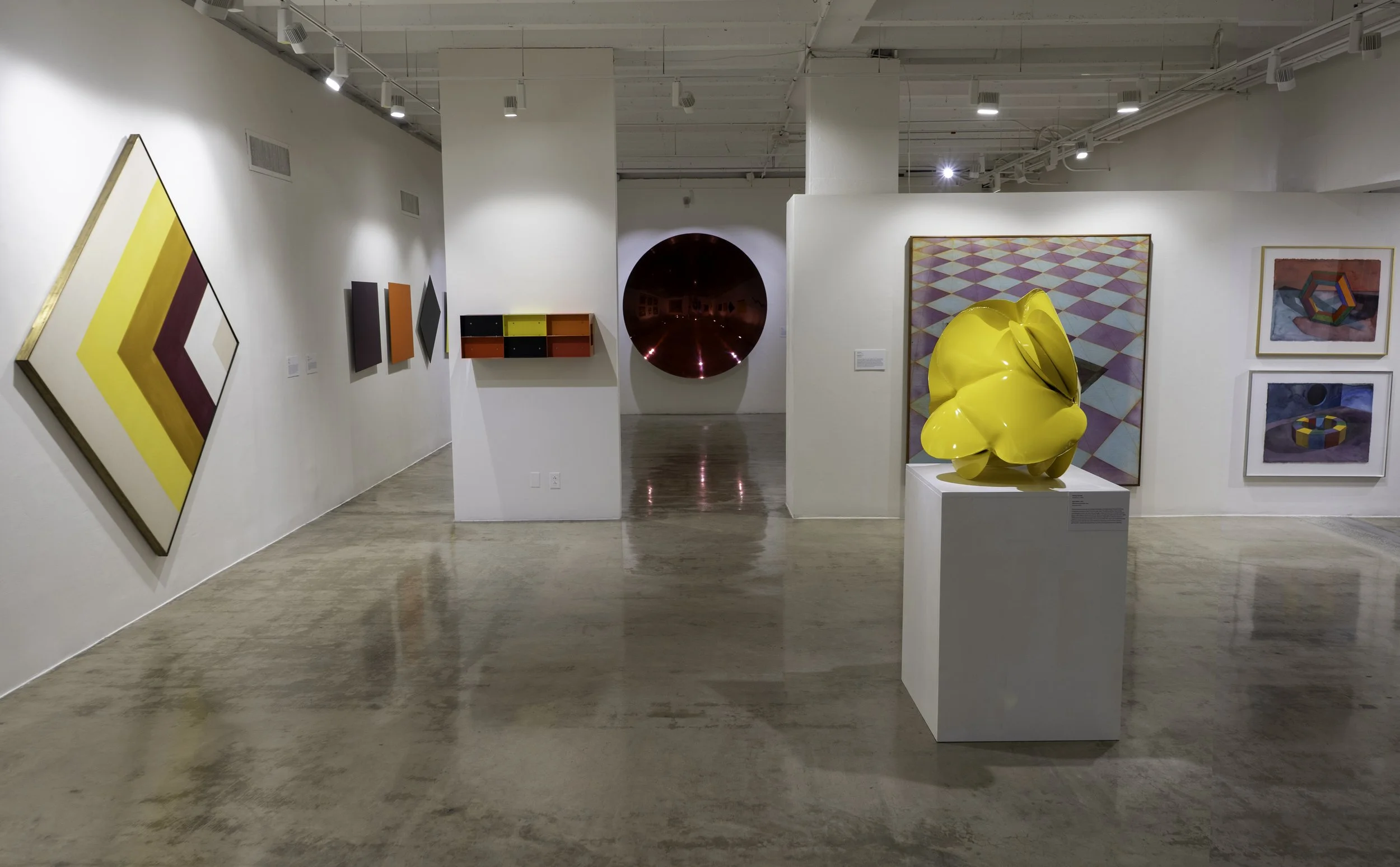
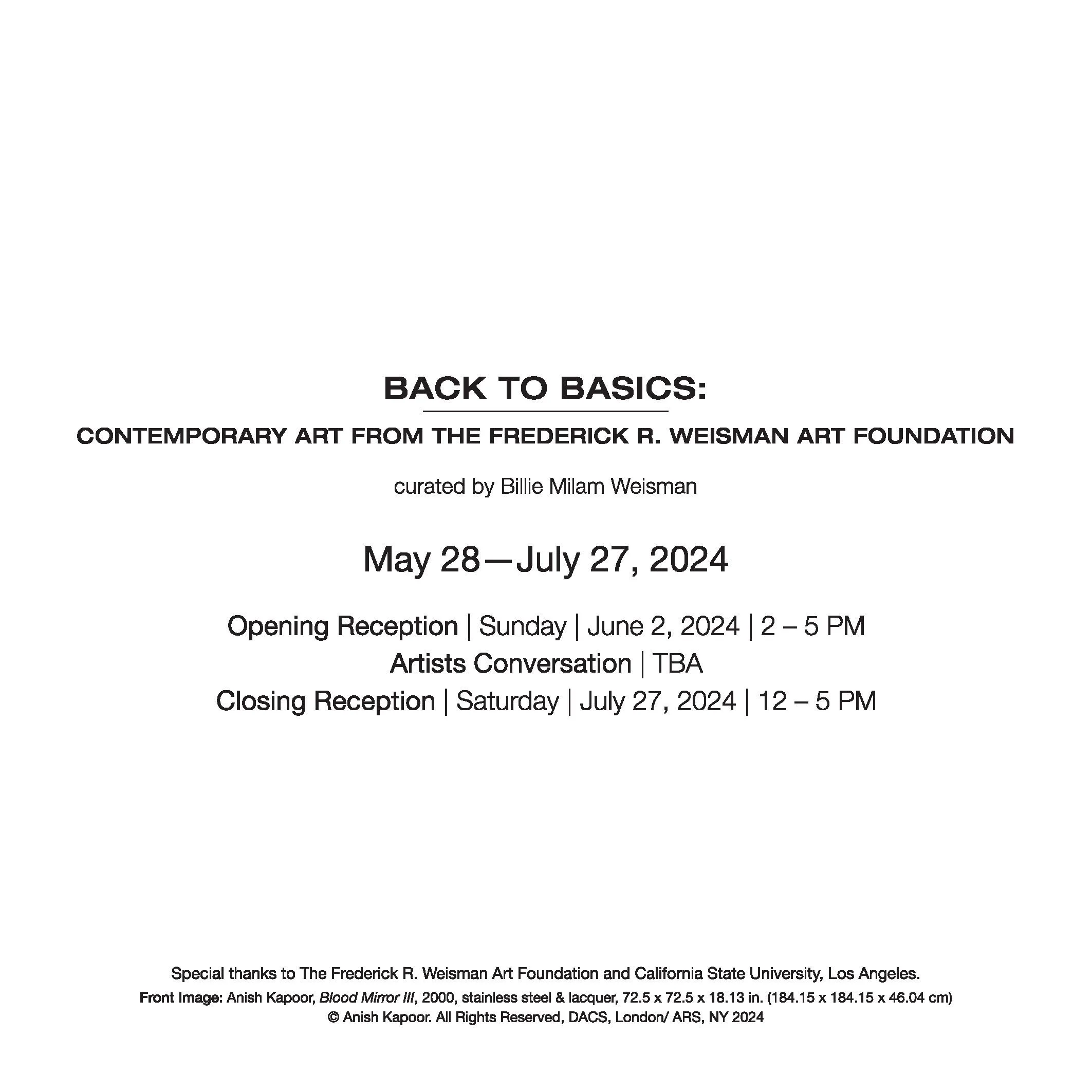
“BACK TO BASICS: Contemporary Art from Frederick R. Weisman Art Foundation”
Curated by Billie Milam Weisman
& Collaborated with Ronald H. Silverman Fine Arts Gallery
May 27 – July 28, 2024
Foreword by Mika M. Cho
Presenting The story of modern Western art since the 1940s may be encapsulated and abridged as the ascendency of the ontology of the self or the expression of pure feelings as exemplified by the abstract expressionists, followed by a view of the quotidian context seen in the Pop arts, along with the expressions labeled as the geometry of the mind that has been categorized as the hard-Edge, Color-Field, or the Minimalist art. These movements preceded postmodernism, whose focus was primarily on the relation between truth and language.
This exhibit, “Back to Basics,” on Minimalism, Color-Field, Hard-Edge, Light and Space, and Conceptualism, is personified by a number of phenomenal artists whose work reflects the very soul and psyche of America in the post-war years. A few, in this exhibit, span the transition from abstract expressionism into Color-field and minimalism as typified.
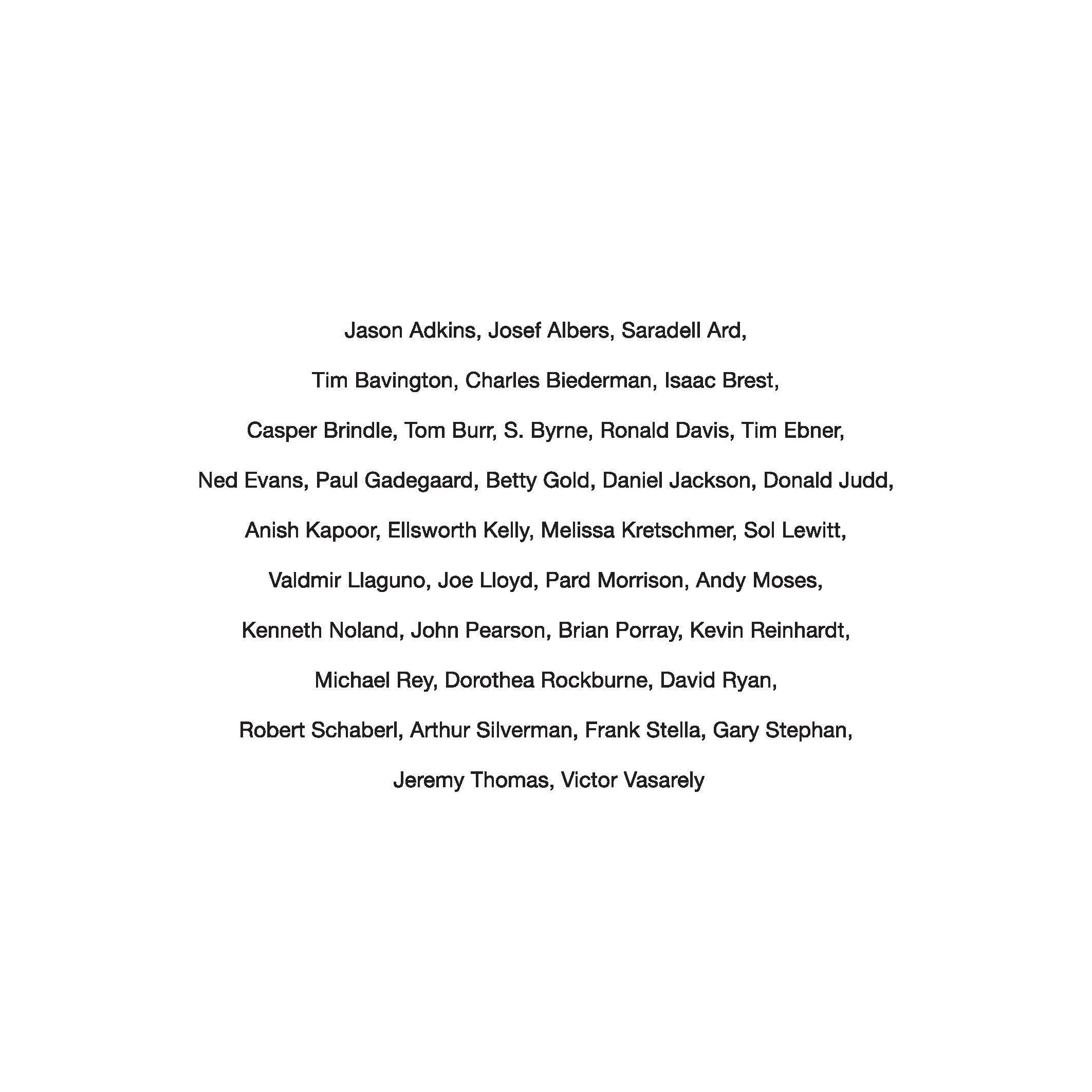
The works of Ellsworth Kelly, Josef Albers, Paul Gadegaard, Kenneth Noland, and S. Byrne offer a unified, pure, and universal vision of the mind, though spanned across many decades. The integrity of uniformity and the power of singularity elevates these works to masterpieces. Here, all elements and dualities are reduced to a singularity and transcend above and beyond history, culture, and rhetoric. On the other hand, the expressions of Frank Stella, Ronald Davis, Dorothea Rockburne, and Arthur Silverman acknowledge the multiplicity of the primary constituent unit, alluding to the layering of space and time by their concentric designs, parallel arrangements, and fused forms. The fused designs are best seen in the works of Tim Ebner, Tim Bavington, Ned Evans, Casper Brindle, Andy Moses, and Kevin Reinhart. The recognition of multiple layers across time and the fusion of forms anticipates certain features of postmodernism and ultimately conveys the complexity that is inherent in the pure and straightforward geometry and colors as embodied.
This Exhibition,” Back to Basics,” deals with the geometry of the mind in the entropy of nature—such constructions as circles, spheres, squares, and lines—shown generally in primary or monochromatic color, evoke a sense of being within the psyche and transcendent of nature. Elemental shapes convey the immensity of man’s feelings and his limits in a vast and incomprehensible universe. Back to Basics is the simple evolution of universal artistic sensibility through the essential exploration of color, medium, and space.
What turns out to be fascinating about this Exhibition is that the geometry of the mind or the patterned constructs of its outlooks turn out to be, after scrutiny, just as complex, discursive, and unraveled as the works of the Abstract Expressionists which the Minimalist had attempted to overcome and exceed beyond as they had envisioned simplicity to be universality, centrality and the constituent element of being and thought. Thus, on the whole, while all of these works relate to signs (semiosis), they can also be understood as symbols (metaphors) of their time and place.
Leonardo da Vinci once said, “Simplicity is the ultimate sophistication!”

Exhibition Synopsis
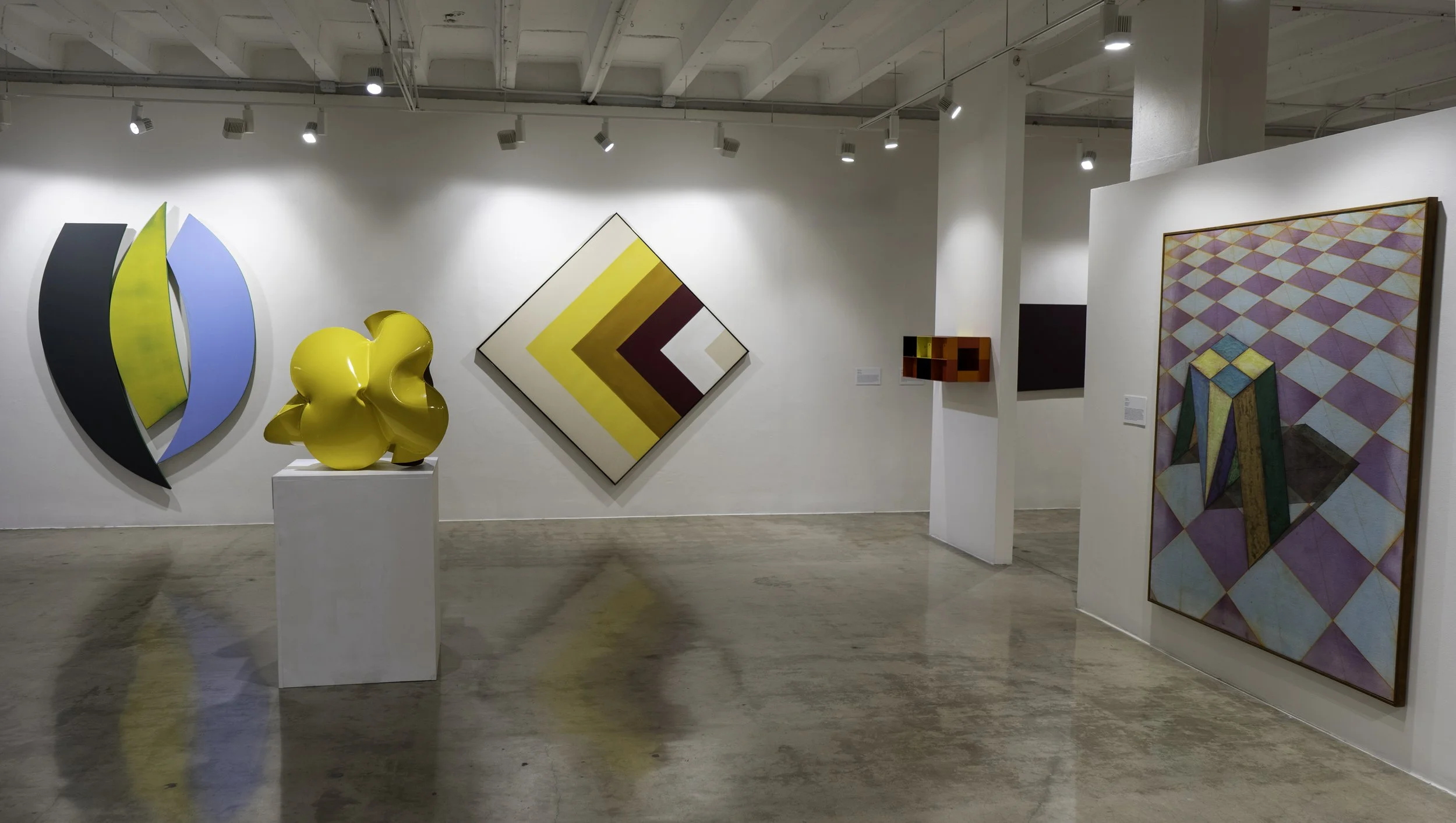
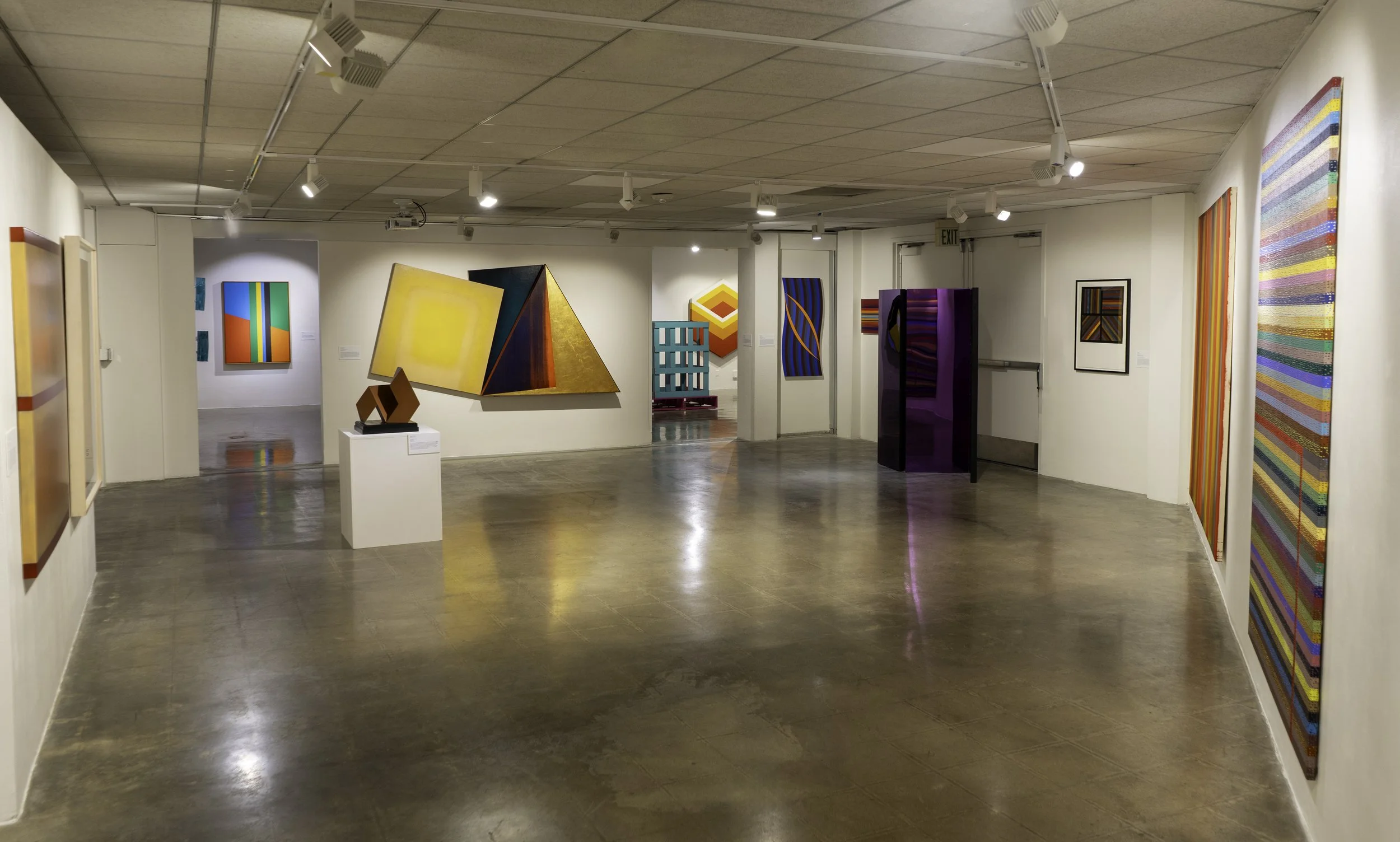
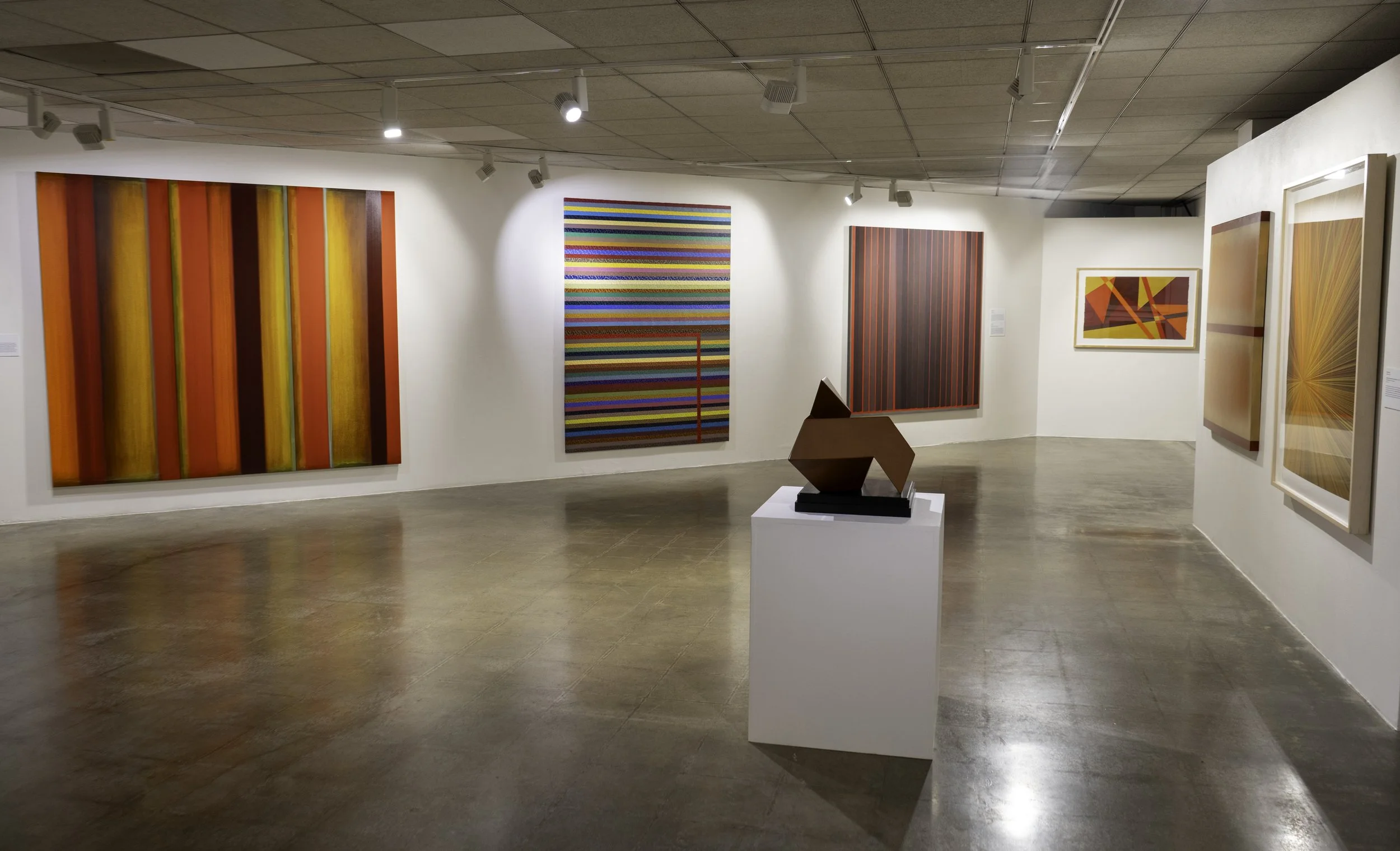
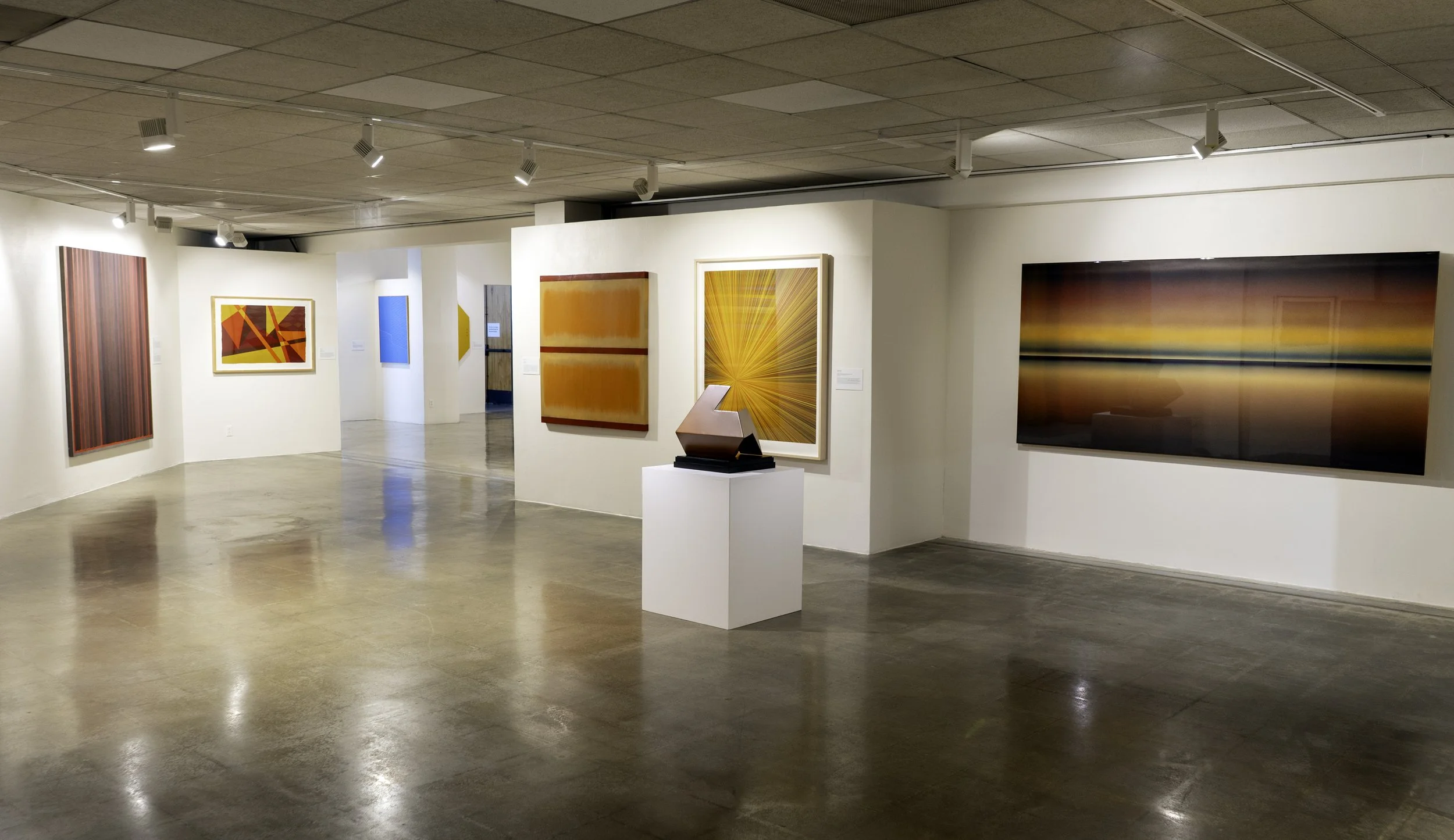
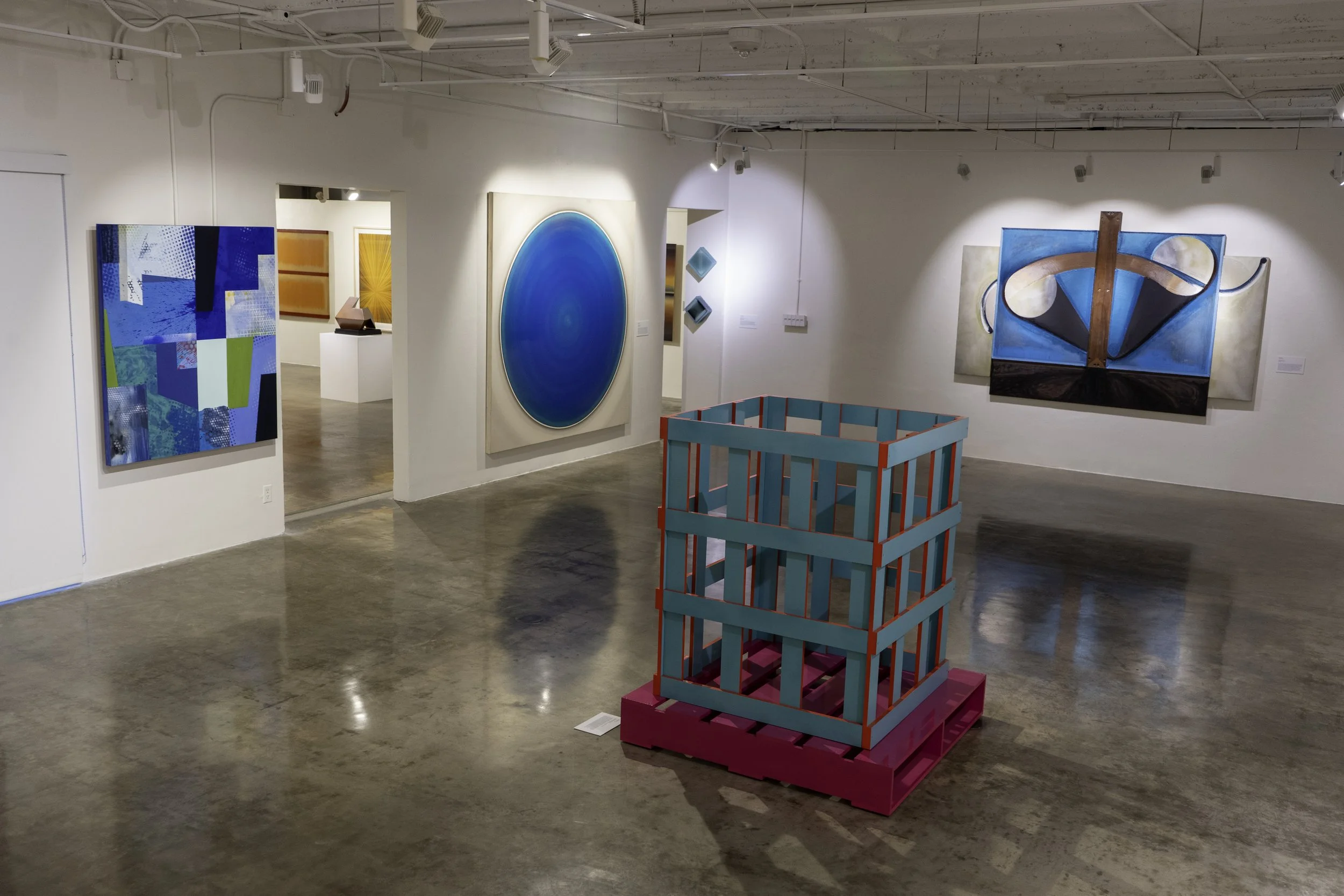
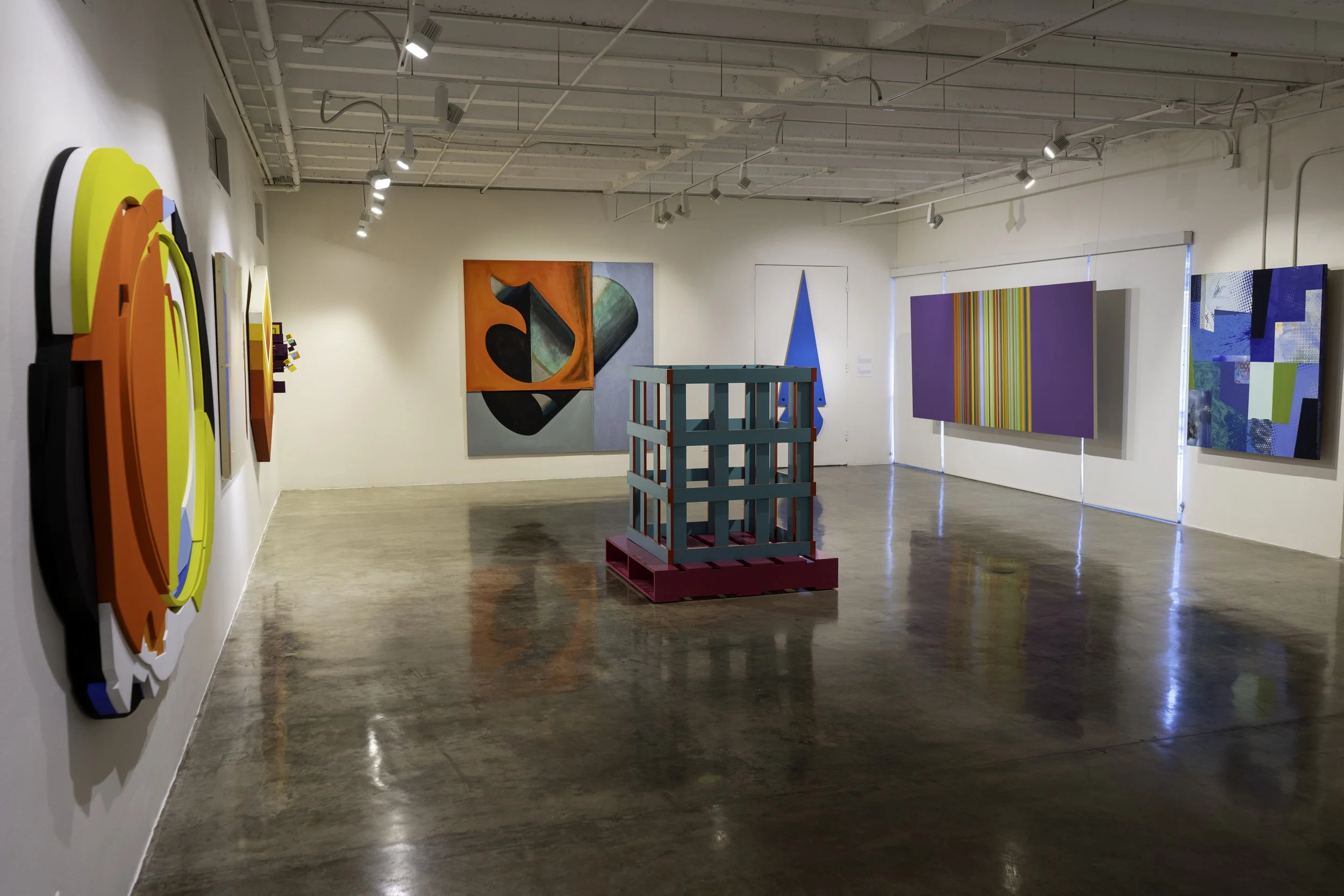
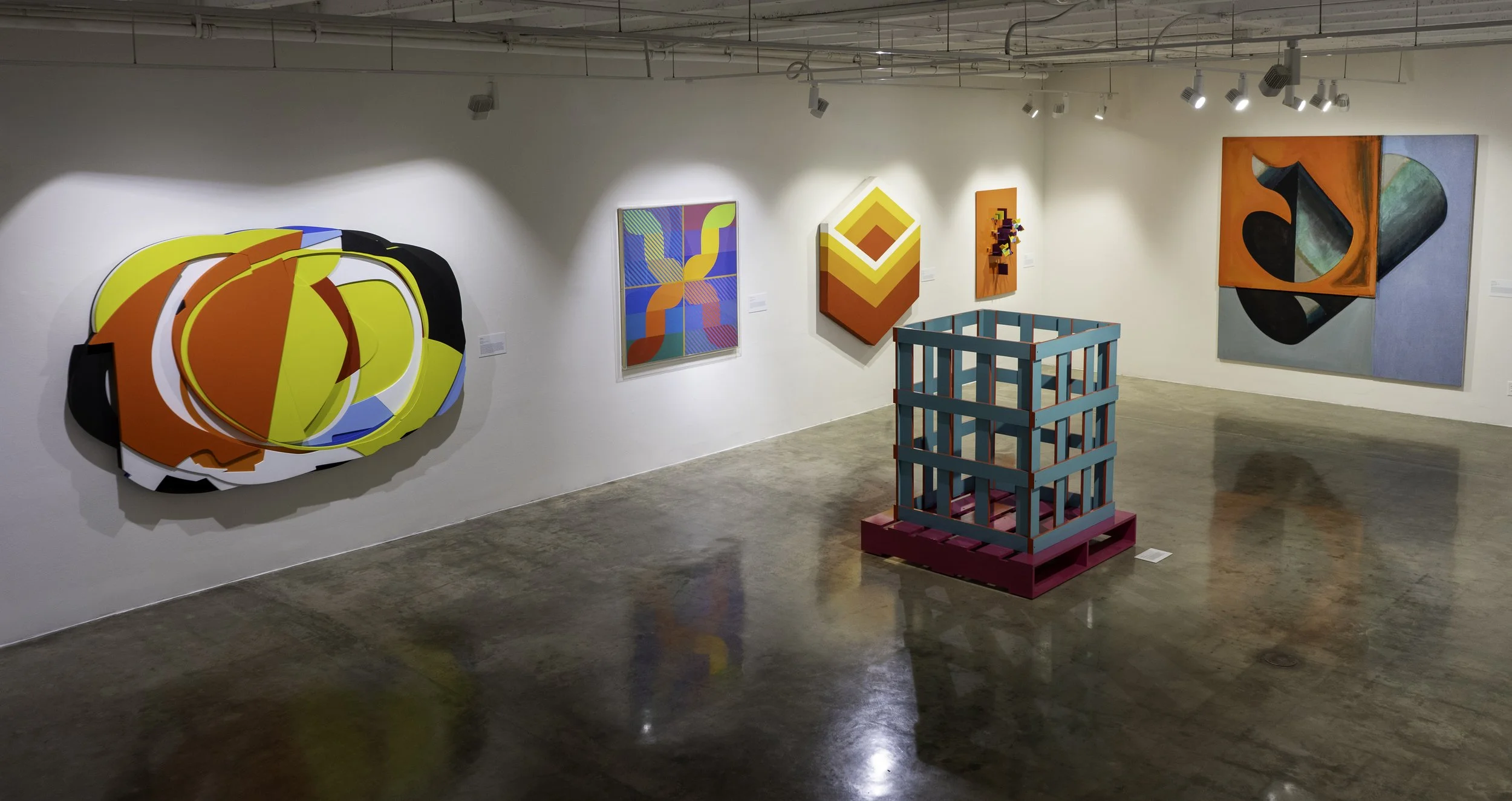
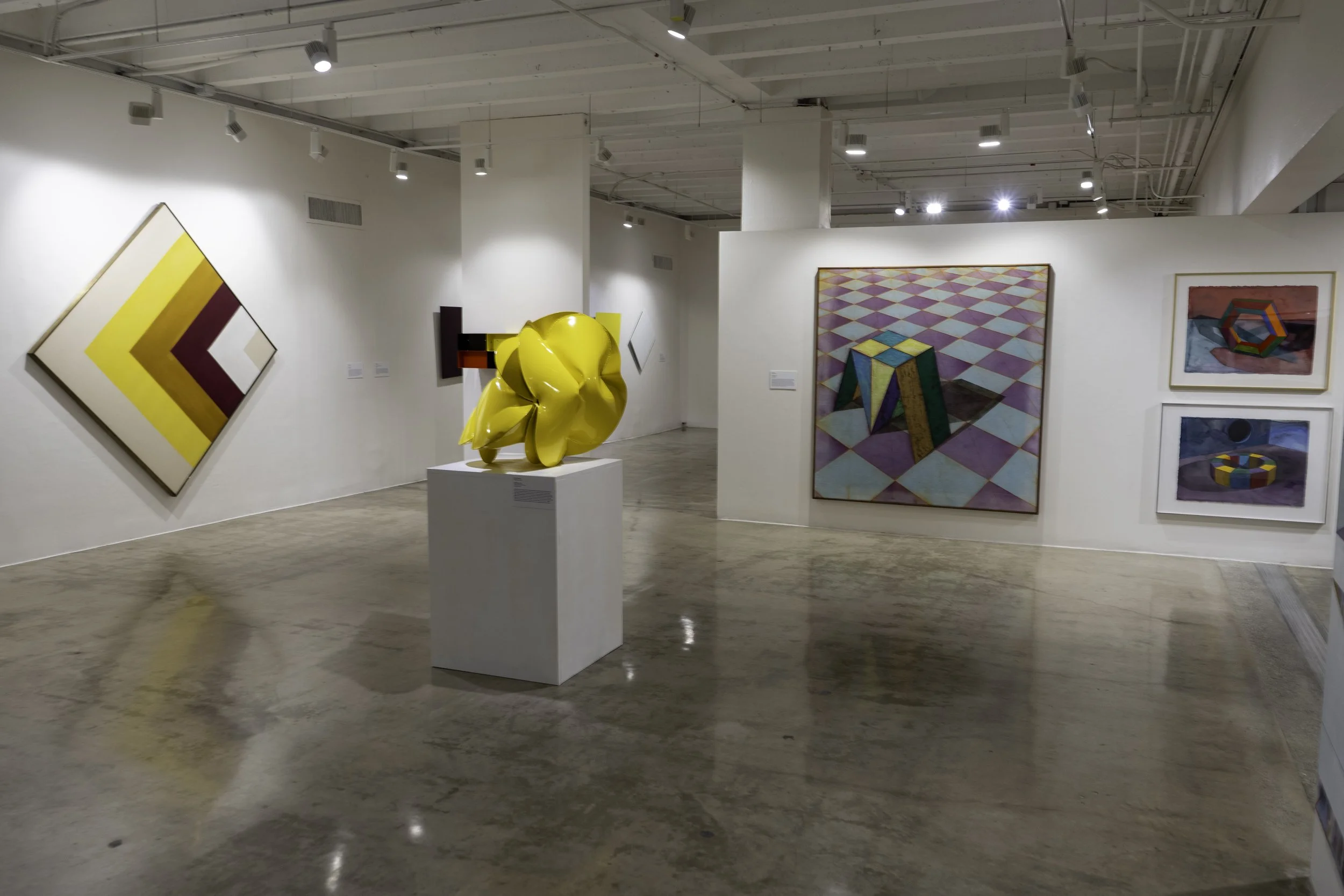
Back to Basics focuses on simple form and the use of color to impart meaning by featuring a diverse international roster of contemporary artists from the Frederick R. Weisman Art Foundation in Los Angeles. Through exploring the range of geometric abstraction from 1960s Colorfield painting, Hard-Edge, and Minimalism to the present, this exhibition considers how ‘less’ can be ‘more.’ The artists who pioneered geometric abstraction advanced a new way of seeing-one based on basic forms, powerful shapes, and essential colors. Their goal was to reach something vital and fundamental in human experience. This goal is still being studied by the continuing work of the artist represented in Back to Basics.
This exhibition features 51 works of art ranging in date from 1947 to 2023. It includes works by the great names in postwar art- Josef Albers, Kenneth Nolan, Donald Judd, Sol LeWitt, and Ellsworth Kelly- and by a new, younger generation of artists- Anish Kapoor, Tim Bavington, and Isaac Brest, to name but a few. Other artists in the exhibition, such as Pard Morrison, Joe Lloyd, and Gary Stephan, use imprecise freehand strokes to create simple yet provocative explorations of form, color, and light. These works present over half a century of artists investigating the timeless power of simplicity.
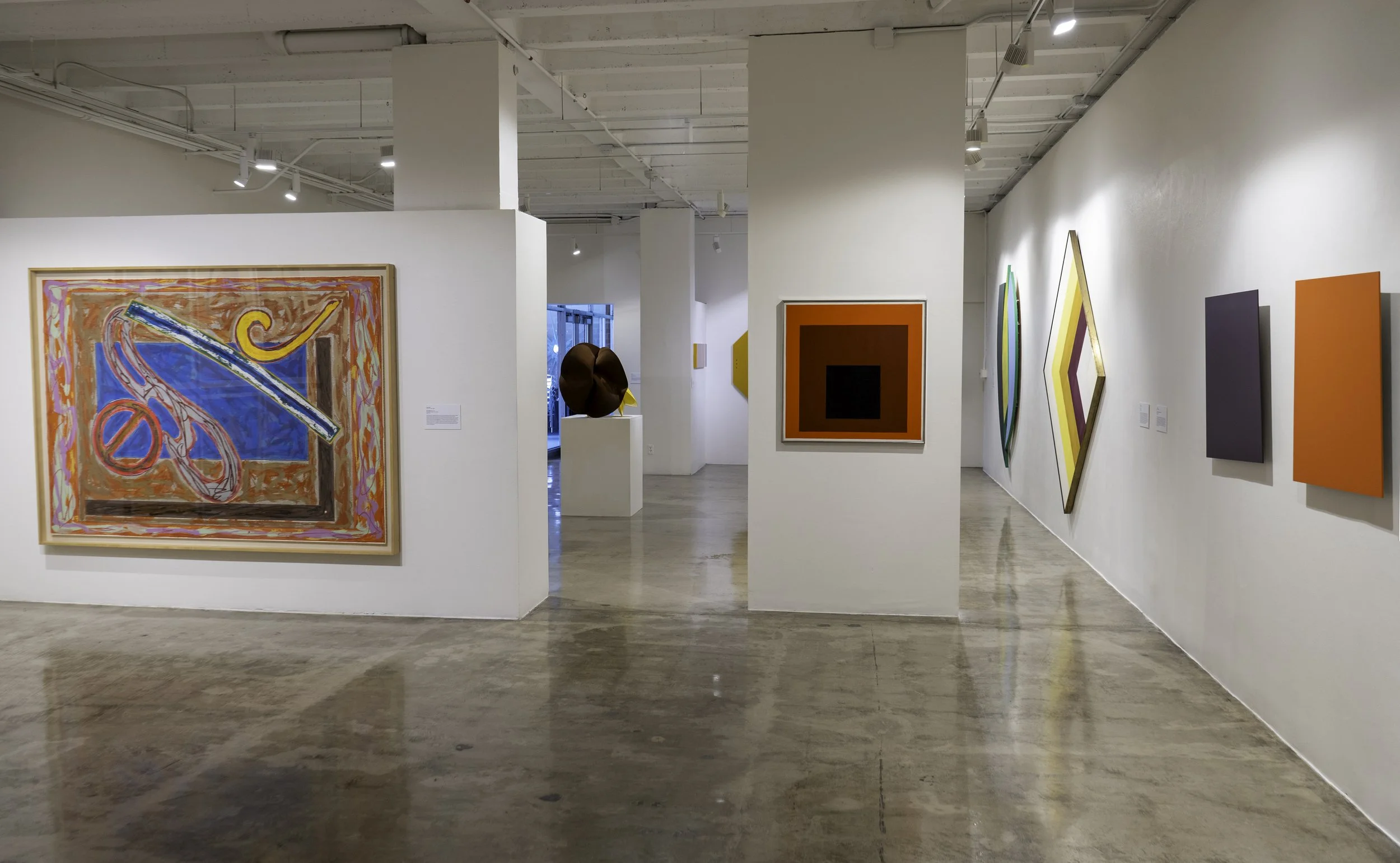
Although the art is united by a central vocabulary of simple, geometric forms, the message and meaning of each work differ dramatically. Josef Albers, the German-born American artist and educator, was interested primarily in perception. He inspired generations of artists through his teaching, first at the famed Bauhaus School in Germany, then at Black Mountain College, and finally at Yale University. He is represented by Homage to the Square: Upon Arrival, 1958. In this iconic series he used a single format-three offset concentric squares-to explore the subjective experience of color. His goal was to test how different pigments arranged side-by-side can produce radically different perceptual and psychological effects, such as the feeling of forms advancing or receding in space.
Ellsworth Kelly also used geometry to explore perception but did so in a different way. While an art student studying in Paris in the 1950s, he became captivated by fascinating abstract shapes he noticed on the streets, such as a shadow or the area defined by a partially opened door, Shapes such as these-ignored and overlooked by most people- became the basis of his refined and elegant Painted Wall Sculptures of 1982, a series of five brightly colored, eccentrically shaped panels. The artist credits his experience as a bird-watch as a child and as a camouflage artist during World War II as essential to influencing his visual sensibility.
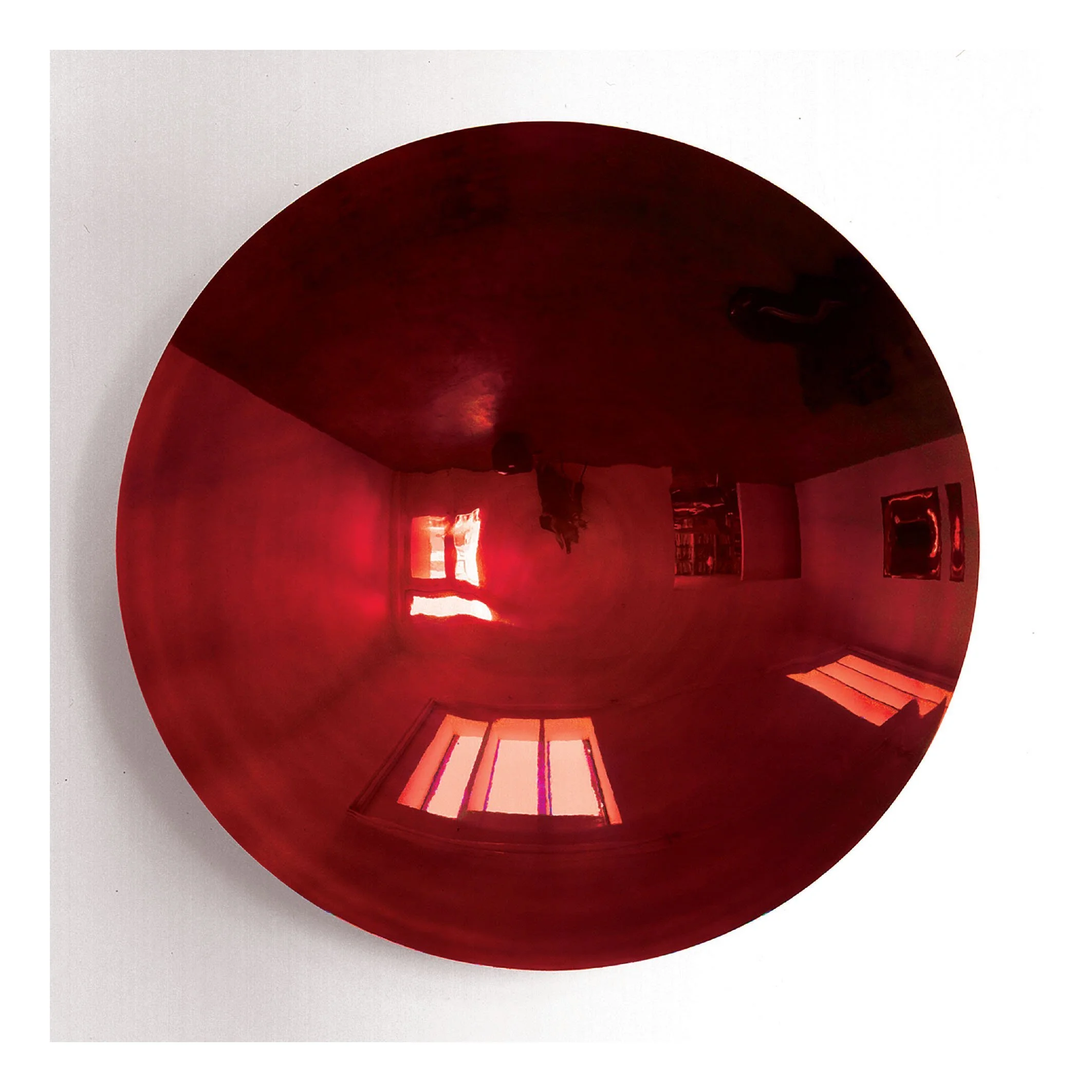
While artists such as Albers and Kelly explored perception, the British-Indian sculptor Anish Kapoor was most interested in transcendence. Since the mid-1990s, he has worked with highly reflective surfaces of polished stainless steel. These sculptures are mirror-like, reflecting or distorting the viewer and surroundings. Perhaps the best-known of his sculptures in the United States is Cloud Gate, a monumental public sculpture in Chicago’s Millenium Park, resembling a giant mirrored bean. He is represented at the Weisman Foundation by Blood Mirror III, 2000. This mirrored, deep red bowl - which seems to be present and absent at the same time - offers a transcendental experience that combines the artist’s interests in both Western and Eastern culture.
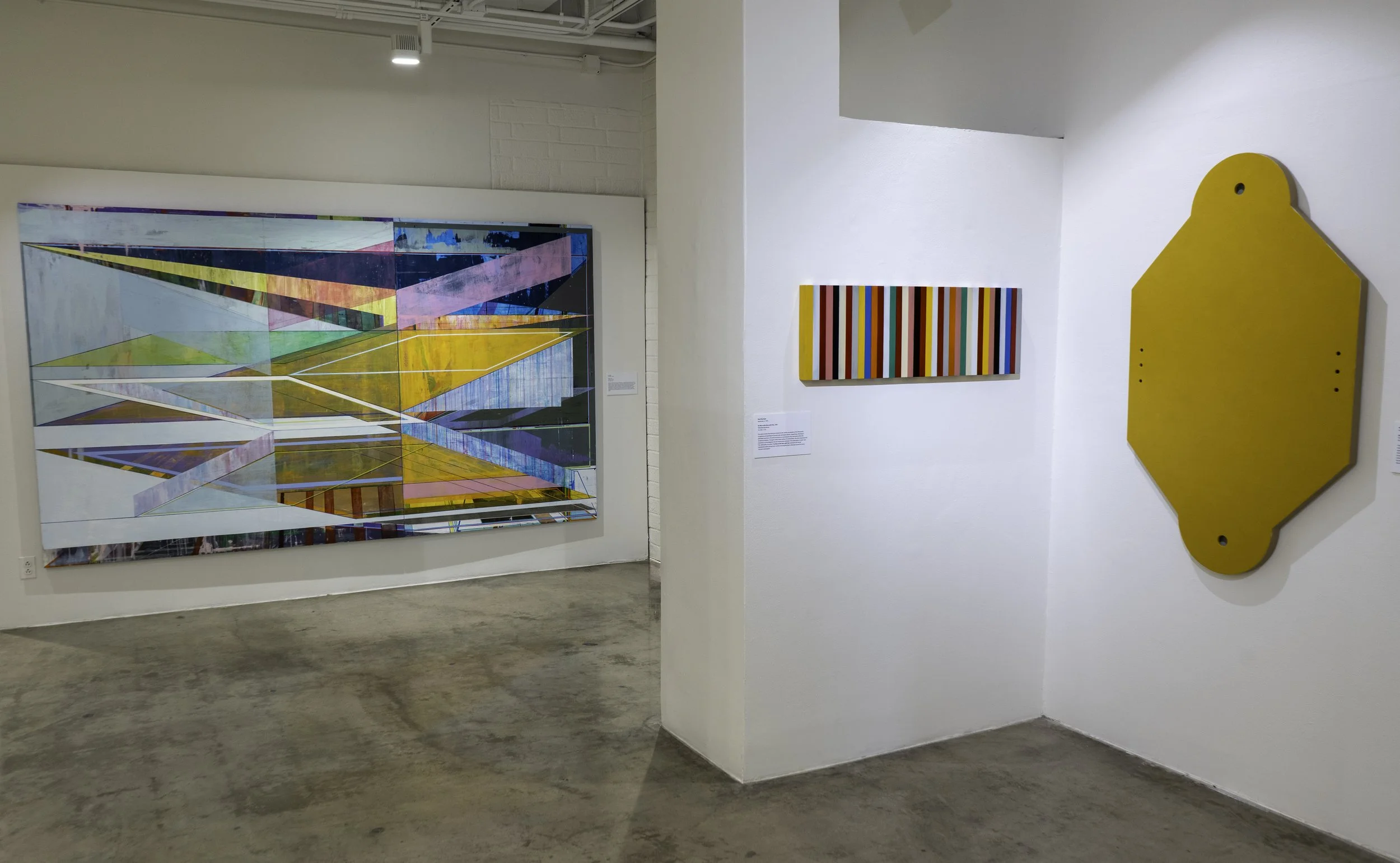
Tim Bavington combines digital explorations with artistic expression. He bases his abstract paintings on contemporary music, often choosing rock-and-roll songs. Using a computer program, he translates notes into vertical bands of color. He then carefully paints his pattern of notes using an airbrush on his canvas. His paintings study the connection between the visual and the aural, using abstraction to cross into the realm of other sensory phenomena.
As the Bauhaus artist Paul Klee once said, “Art does not reproduce the visible; rather, it makes it visible.” The artists in this stunning exhibition show that geometry is a creative tool that can be used to explore the realms of ideas and perception, of seeing and knowing, while stripping away any sense of portraiture, landscape, or iconography to demonstrate that less can truly be more. Nothing is overworked: Back to Basics is the simple evolution of universal artistic sensibility through the essential exploration of color, medium, and space.
Billie Milam Weisman, Director, Frederick R. Weisman Art Foundation